
Introduction
Every few years, headlines announce that “this time it’s different” — a new technology, a new asset class, or a new economic era is supposedly rewriting the rules of investing. Prices soar, ordinary people start trading with confidence they’ve never had before, and it feels like everyone is getting rich. Then, often without much warning, prices collapse, and a lot of people lose money they couldn’t afford to lose.
This pattern has a name: a market bubble. Understanding what bubbles are, why they form, and how to recognize the warning signs is one of the most valuable skills you can develop as an investor. You don’t need to predict the exact moment a bubble bursts — nobody can do that reliably. But learning to spot the signs can help you avoid getting swept up in euphoria, protect your portfolio, and make more rational decisions when everyone around you is losing their heads.
In this guide, you’ll learn what a market bubble actually is, the psychological and financial mechanics behind it, a practical step-by-step approach to evaluating whether an asset or market looks overvalued, common mistakes beginners make, and where to go next to deepen your knowledge. This is educational content designed to build your judgment, not a prediction of what will happen next in any specific market.
The Basics
What Is a Market Bubble?
A market bubble occurs when the price of an asset — a stock, a sector, real estate, cryptocurrency, or even something like tulip bulbs (yes, that really happened in the 1600s) — rises far beyond what its underlying value or earning potential can reasonably justify. Prices keep climbing not because the asset is becoming genuinely more valuable, but because more and more people believe someone else will pay an even higher price later.
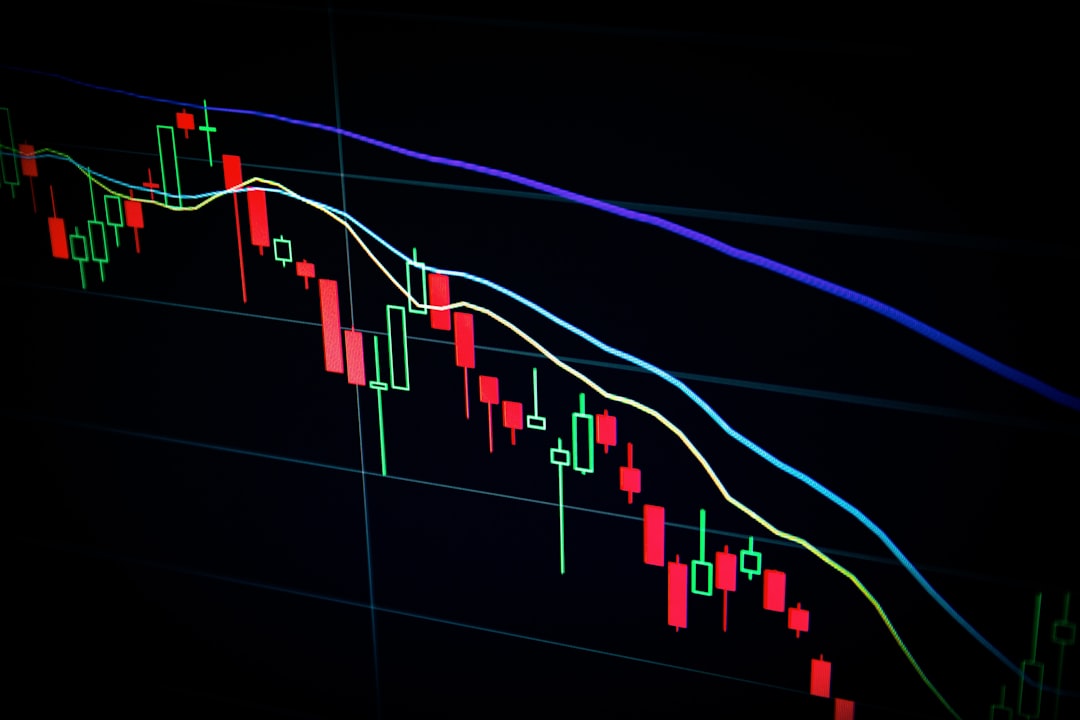
Eventually, the buying pressure runs out. Confidence cracks, sellers rush for the exits, and prices fall rapidly — often much faster than they rose. This collapse is sometimes called the bubble “popping” or “bursting.”
Key Terminology
- Intrinsic value: What an asset is actually worth based on fundamentals like earnings, cash flow, assets, or rental income — as opposed to its current market price.
- Overvaluation: When an asset’s price is significantly higher than its intrinsic value.
- Speculation: Buying an asset primarily because you expect its price to rise, rather than because of its underlying value.
- Irrational exuberance: A term popularized by former Federal Reserve Chairman Alan Greenspan, describing excessive investor optimism that drives prices beyond reasonable levels.
- Correction: A decline of 10% or more in an asset’s price, often a healthy and normal part of markets.
- Crash: A sudden, severe price decline, often associated with the end of a bubble.
- FOMO (Fear of Missing Out): The anxiety that drives people to buy an asset simply because everyone else seems to be profiting from it.
How Bubbles Fit Into Investing
Bubbles aren’t a fringe phenomenon — they’re a recurring feature of financial history. The Dutch tulip mania, the dot-com bubble of the late 1990s, the U.S. housing bubble of the mid-2000s, and various cryptocurrency boom-and-bust cycles all follow a strikingly similar pattern. Understanding this pattern is part of building overall financial literacy, because it helps you evaluate risk, resist herd mentality, and make decisions based on evidence rather than emotion — skills that matter in every market environment, not just during obvious bubbles.
Step-by-Step Guide: How to Evaluate Whether Something Looks Overvalued
You don’t need an economics degree to assess bubble risk. Here’s a practical process you can apply to any asset or sector.
Step 1: Learn the Basic Valuation Metrics (Time: 1–2 hours)
Start by understanding a few simple tools:
- Price-to-Earnings (P/E) ratio: Compares a company’s stock price to its earnings. A very high P/E ratio compared to historical averages or industry peers can signal overvaluation.
- Price-to-Sales (P/S) ratio: Useful for companies without steady profits, comparing price to revenue.
- CAPE ratio (Cyclically Adjusted Price-to-Earnings): A broader market valuation tool that smooths out earnings over 10 years, popularized by economist Robert Shiller.
- Price-to-rent or price-to-income ratios: Useful for evaluating housing markets.
Free resources like Yahoo Finance, Macrotrends, or multpl.com display these figures for stocks and broad markets.
Step 2: Compare Current Valuations to Historical Norms (Time: 30–60 minutes)
Look at how current valuation metrics compare to their long-term historical averages. If a stock, sector, or market is trading at valuations far above its historical range — especially two or three times higher — that’s a caution flag worth investigating further.
Step 3: Examine the Narrative (Time: 30 minutes)
Bubbles almost always come with a compelling story: “This technology will change everything,” or “Real estate always goes up.” Ask yourself:
- Is the excitement based on demonstrated profits and results, or mostly on future promises?
- Are people justifying high prices by saying “the old rules don’t apply anymore”?
- Is media coverage overwhelmingly positive, with little space given to skeptics?
A strong, emotionally compelling narrative combined with weak underlying fundamentals is a classic bubble ingredient.
Step 4: Watch for Behavioral Red Flags (Time: Ongoing observation)
Pay attention to how people around you are behaving:
- Are friends, family, or coworkers with little investing experience suddenly trading heavily?
- Is there widespread talk of quitting jobs to trade or invest full-time?
- Are people borrowing money (margin, loans, credit cards) to buy in?
- Does the asset dominate casual conversation, social media, and news coverage?
These are signs of speculative mania rather than measured, fundamentals-based investing.
Step 5: Check Debt and Leverage Levels (Time: 1 hour)
Bubbles are often fueled and worsened by borrowed money. Research whether:
- Investors are using significant leverage (margin debt) to buy the asset.
- Lending standards have loosened significantly (as happened before the 2008 housing crash).
- Companies in the sector are taking on unusual amounts of debt to fund growth or buybacks.
High leverage doesn’t just inflate prices — it also makes the eventual decline more severe, since forced selling accelerates the fall.
Step 6: Look at Supply and New Entrants (Time: 30 minutes)
When a sector becomes irresistibly profitable-looking, new companies, products, or speculators flood in. A surge of new companies going public in a hot sector, an explosion of new cryptocurrency tokens, or a wave of new real estate development in one area can indicate a market nearing its peak.
Step 7: Assess Your Own Emotions (Time: 5 minutes, but revisit often)
This might be the most important step. Ask yourself honestly:
- Do I feel anxious about missing out if I don’t buy now?
- Am I considering investing more than I can afford to lose?
- Have I done independent research, or am I mostly following what others are doing?
If your decision is driven by excitement or fear rather than research, that’s worth pausing on.
Step 8: Diversify and Set Boundaries (Ongoing)
Rather than trying to perfectly time a bubble’s peak (which is extremely difficult even for professionals), maintain a diversified portfolio and set personal rules, such as limiting how much of your total portfolio goes into any single speculative asset.
Common Questions Beginners Have
“Isn’t every rising market a bubble?”
No. Prices rise for legitimate reasons all the time — strong company earnings, economic growth, or genuine innovation. A bubble specifically involves prices detaching from realistic fundamentals, driven mainly by speculation rather than value.
“Can I get rich by investing early in a bubble and selling before it pops?”
Some people do, but it’s extremely risky and closer to gambling than investing. Timing the peak is notoriously difficult, and many investors who try end up holding assets after prices have already collapsed.
“If experts disagree about whether something is a bubble, how can I know?”
You often can’t know for certain in real time — even professional economists frequently disagree. That’s exactly why the goal isn’t to achieve certainty, but to recognize elevated risk and adjust your behavior accordingly, such as by not overcommitting your savings.
“Does a bubble always mean the underlying technology or asset is worthless?”
Not necessarily. The dot-com bubble popped in 2000, but the internet itself went on to transform the global economy. Many bubble-era companies failed, but some (like Amazon) survived and thrived. A bubble is about price versus value at a point in time, not necessarily about whether the underlying idea has merit long-term.
“Should I sell everything if I think we’re in a bubble?”
Not necessarily. Sudden, drastic moves based on speculation about timing can backfire. A more measured approach is reviewing your overall diversification and risk tolerance rather than making all-or-nothing bets.
Mistakes to Avoid
1. Chasing performance. Buying an asset simply because it’s already risen dramatically is a common trap. Past performance doesn’t guarantee future results, especially after a rapid climb.
2. Ignoring valuation entirely. Some beginners assume that as long as a company or trend is popular, price doesn’t matter. In investing, the price you pay for an asset relative to its value matters enormously.
3. Using borrowed money to invest in speculative assets. Leverage magnifies both gains and losses, and bubbles have a way of wiping out over-leveraged investors particularly fast.
4. Believing “this time is different” without evidence. This phrase has preceded nearly every historical bubble. Healthy skepticism is a valuable habit.
5. Panic-selling everything during a downturn. Overcorrecting out of fear can lock in losses. A thoughtful, pre-planned strategy is better than reactive decisions.
6. Putting too much money into one asset or sector. Concentration increases both potential rewards and potential losses. Diversification is one of the simplest ways to manage bubble risk.
7. Confusing a good story with a good investment. An exciting narrative can be part of a legitimate investment case, but it should be supported by real financial data.
Getting Started
You can begin building bubble-awareness today, without any special tools or paid subscriptions:
- Pick one asset or sector you’re curious about and look up its current valuation metrics using a free tool like Yahoo Finance or Macrotrends.
- Compare it to historical averages for that same asset or sector.
- Read a balanced mix of opinions — both bullish and skeptical — rather than only sources that confirm what you already believe.
- Set a personal rule, such as never investing more than a fixed percentage of your portfolio in a single speculative idea.
- Keep a simple investing journal noting why you made each investment decision. This helps you distinguish research-based choices from emotional ones later on.
Minimum requirements: no special software or expensive resources are needed — just curiosity, a notebook or spreadsheet, and access to free financial websites.
Next Steps
Once you’re comfortable identifying overvaluation warning signs, consider deepening your knowledge with these related topics:
- Behavioral finance: Studying cognitive biases like herd behavior, overconfidence, and loss aversion will help you understand why bubbles form and why they’re so hard to resist.
- Historical case studies: Reading about the dot-com bubble, the 2008 housing crash, and other historical episodes provides pattern recognition you can apply going forward.
- Fundamental analysis: Learning to read financial statements will sharpen your ability to judge whether a company’s price matches its actual business performance.
- Portfolio diversification and asset allocation: These strategies help protect you regardless of whether a bubble is forming in any particular corner of the market.
- Risk management principles: Understanding position sizing and stop-loss strategies can help limit damage if you do end up holding an overvalued asset.
FAQ
1. How long do market bubbles usually last?
There’s no fixed timeline — some bubbles build over a few months, while others, like the dot-com bubble, developed over several years. What they share is an eventual disconnect between price and fundamentals.
2. Can bubbles happen in any asset class?
Yes. Bubbles have occurred in stocks, real estate, commodities, currencies, and even collectibles like tulip bulbs and trading cards. Any asset that people can trade and speculate on is potentially vulnerable.
3. Is it possible to profit from a bubble responsibly?
Some experienced investors do participate cautiously in speculative trends while managing risk carefully, but this requires discipline, a clear exit strategy, and money you can genuinely afford to lose. For most beginners, a more conservative, diversified approach is safer.
4. What usually causes a bubble to burst?
Triggers vary — rising interest rates, a piece of negative news, a large investor selling, or simply investor sentiment shifting. Often, the exact trigger matters less than the fact that valuations had already become unsustainable.
5. Are bubbles always bad for the economy?
Not entirely. While bubbles can cause significant financial pain when they burst, some (like the dot-com era) also leave behind infrastructure, innovation, or lessons that benefit the economy long-term, even if many individual investors lost money along the way.
6. How can I tell the difference between a bubble and a genuine long-term growth trend?
Look for whether price increases are supported by real earnings, revenue, or cash flow growth, versus increases driven mainly by speculation and expectation. Genuine trends tend to show gradually improving fundamentals alongside price growth, while bubbles show prices racing far ahead of any measurable improvement in the underlying business or asset.
Conclusion
Spotting a market bubble isn’t about having a crystal ball — it’s about developing the habits of a careful, level-headed investor: checking valuations against history, questioning popular narratives, watching for excessive borrowing and speculation, and being honest with yourself about your own emotions. No one can time markets perfectly, but by learning these warning signs, you put yourself in a far stronger position to protect your money and make thoughtful decisions, regardless of what the crowd is doing.
Want to keep building your investing knowledge? Subscribe to our free newsletter for weekly market analysis, practical investment insights, and beginner-friendly guides delivered straight to your inbox. It’s a simple way to stay informed and keep growing as an investor.
—
This article is for educational purposes only and does not constitute financial advice. Always do your own research and consider consulting a licensed financial advisor before making investment decisions.